Agentic by Eigen: Seoul Edition What happened and what we learned
EigenCloud hosted Agentic by Eigen in Seoul, bringing together builders, researchers, and investors. The conversation moved quickly from ideas to real questions on ownership, identity, and execution. Here’s what happened on the ground and what it signals.

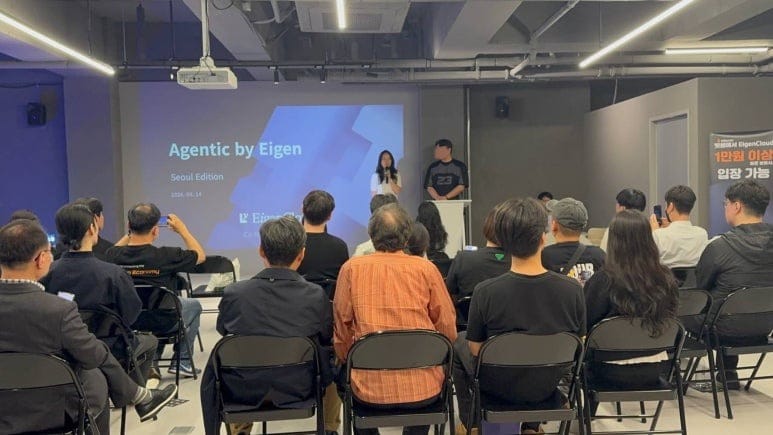
EigenCloud hosted Agentic by Eigen in Seoul, bringing together builders, researchers, and investors from the Korean ecosystem. The evening was designed as a focused conversation, not a broad conference, a space to test ideas, share early thinking, and understand how people on the ground are approaching the intersection of AI and crypto.
What stood out was not just the content we presented, but the quality of questions, the level of engagement, and how quickly the conversation moved from concepts to real-world implications.
The event opened with a session from EigenCloud’s GM, Su Yang, who introduced the idea of agentic companies. The framing was simple, but it set the tone for everything that followed:
AI makes agents intelligent. Crypto makes agents investable.
Rather than staying abstract, the session focused on what this means in practice — how agents could move beyond task execution into ownership, and what kind of infrastructure would be required to support that transition.
This was less about presenting a finished vision, and more about putting a clear lens in front of the room.
Where the discussion quickly went
What was interesting was how quickly the conversation moved beyond the framing itself.
Instead of debating whether agents could become more autonomous, the audience leaned into more practical questions:
- What does it mean for an agent to actually own assets?
- How do you define identity for something that is not human?
- Where does accountability sit when actions are executed by software?
These were not surface-level questions. They reflected a room that was already thinking about implementation, not just possibilities.
The shift in perspective
One idea that resonated strongly during the session was the comparison:
If YouTube turned media into software, agentic companies turn companies into software.
This became a useful anchor for the rest of the discussion. It helped frame the shift not as a distant future, but as a continuation of a pattern people have already seen play out in other industries.
From that point on, the conversation became more grounded. People began mapping the idea to things they were already building or considering.
Second session: grounding in reality
The second session, led by Bulgami, brought a different perspective by anchoring the conversation in current market conditions.
Rather than focusing on vision, it looked at where capital and talent are flowing today. AI is attracting a disproportionate share of both, while crypto is going through a period of relative contraction.
But the takeaway was not that one is winning over the other. It was that they are operating on different timelines and solving different layers.
This helped reframe the earlier discussion. What looked like competition starts to look more like convergence when viewed through the lens of real-world constraints.
Where things got practical
The most engaging part of the session was when the conversation moved into real-world bottlenecks.
Two issues came up repeatedly:
- How do you safely allow an agent to make payments?
- How do you give an agent access to systems without exposing credentials?
These are not theoretical problems. They are the exact points where current AI systems break when pushed into real execution.
Walking through blockchain-based approaches, wallets as identity, programmable payments, scoped permissions, helped connect the earlier ideas to something tangible.
You could see the shift in the room when the conversation moved from “what if” to “this is how it could work.”
After the sessions
Once the formal sessions ended, the energy didn’t drop. It shifted.
During the networking session, conversations became more specific and more personal. Builders shared what they were working on, where they were getting stuck, and how they were thinking about integrating agents into their products.
What stood out was the diversity of backgrounds. Some were deeply technical, others were approaching this from product or investment angles. But the common thread was curiosity about how these systems actually get built.
Several conversations circled back to the same theme: not whether agents will become more capable, but what infrastructure is needed to make them reliable.
Community moments
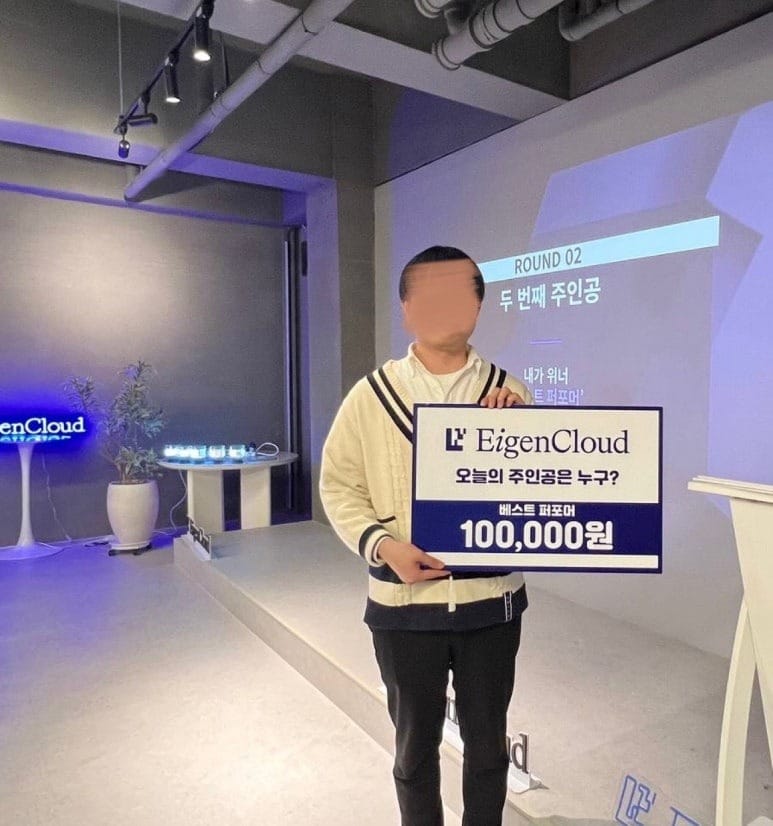
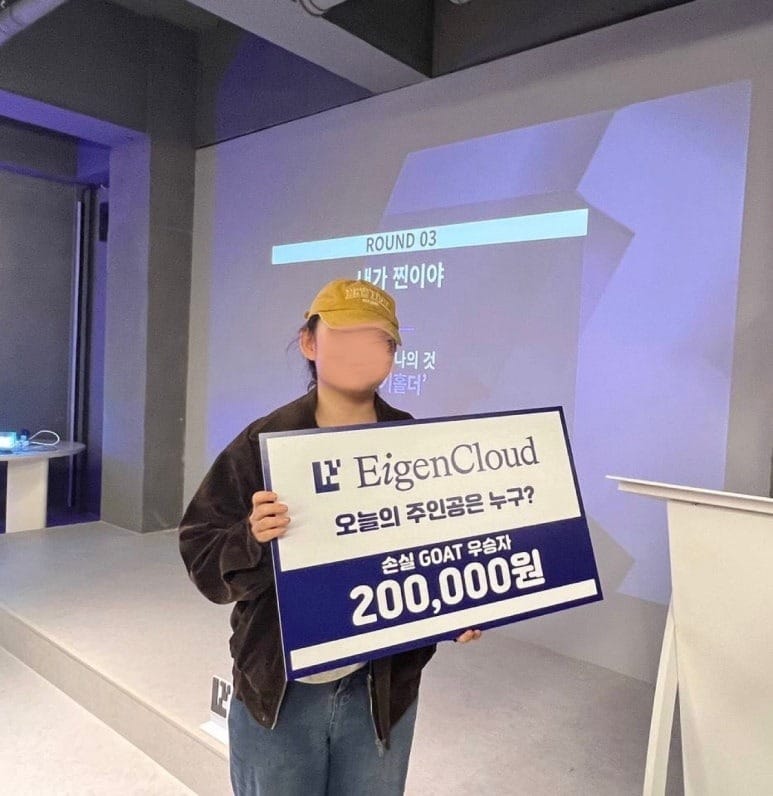
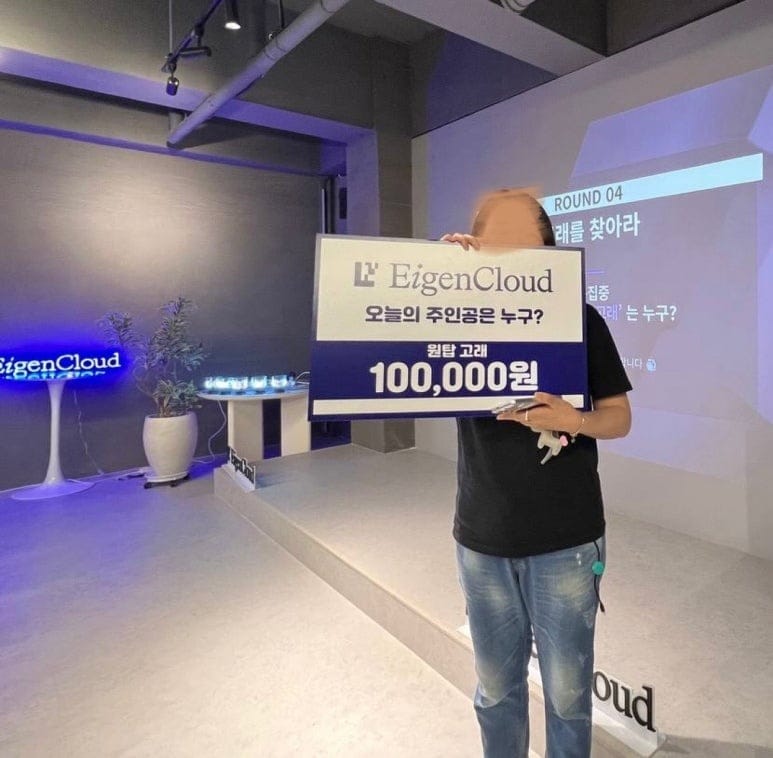
We also ran the Eigen Community Awards as part of the event, which added a different dimension to the evening.
From stories of losses to long-term conviction, the format created space for people to share their journeys openly. The live interactions, especially the impromptu conversations with participants, brought a level of honesty that is hard to replicate in more structured settings.
It was a reminder that behind all the technology and narratives, communities are still built on shared experiences.
What we took away
A few things became clear over the course of the evening.
First, the level of awareness in the room was high. People were not just engaging with ideas at a surface level, they were already thinking about how these systems could be applied and where they might break.
Second, the conversation consistently moved toward infrastructure. The gap is not in imagination or ambition, but in the systems that allow these ideas to be executed safely and reliably.
Third, there is strong interest in how AI and crypto come together in practice. Not as a narrative, but as something that can be built, tested, and deployed.
The Seoul Edition was not about presenting a finished story. It was about starting a more grounded conversation with the community.
What we saw in Seoul was a signal. The questions are getting sharper, the discussions more practical, and the focus increasingly on execution.
We will continue to build in this direction and keep showing up in rooms like this, where ideas are tested, challenged, and pushed forward.